New Words
- Mar 26
- 6 min read
Updated: Mar 30
Suzanne Strempek Shea
From Compositions: A memoir in 42 Essays by
the Kid on Her 8 Years in Catholic School, Handed in 60 Years Late
It was red. Red plastic. Shaped like a fat coin, wide as the bottom of a cup. That made sense because if you lifted the lid, then one and two and three and four and five rings of red plastic would stack and connect and make a drinking cup. Then, you just needed to fill it up.
I felt special because I had a cup, a cup that was like a magician’s trick, and I opened it slow in case anybody was watching. Inside the lid was a smaller lid that opened so I could get out the Johnson’s Baby Aspirin my mother put there that morning because I had a cold and when you have a cold you get to have a baby aspirin, a little orange circle that tastes like the sweetest orange candy. I held the cup while I stood in line for the gray metal water box in the front hallway of school, watching everybody else stick their faces into the squirt of water coming out, something I wouldn’t have to do. We stood in line for the water box, what the nuns called the bubbler, across from the door to the girls’ bathroom–the girls’ lavatory, the nuns called it, nuns calling so much by words I never heard before I came to this place this fall for first grade.
Lavatory made me think of mad scientists in a laboratory. And bubbler made me think of bubbles, but I never saw any when I stepped up to it and pressed the button next to the piece of metal that looked like a parrot’s beak, or stepped on the little bar at the bottom of the box and watched water fly up out of the bottom of the beak, and if I didn’t catch it in my mouth or in a cup it went into a few holes in the top of the box and who knows where it went then.
Lots of things here had names different than you used in your home down the street and across the two bridges that crossed the three rivers that gave my village its name. The blue caps we girls wore were beanies, and to look fancier in church we would take out a little plastic envelope that held a veil that the nuns called a mantilla. Our blue jackets were blazers. The big hall that all the classrooms opened on to was the corridor, a word sounding like quarter so that’s what some of us called it. The books of paper we wrote our alphabet in were tablets, but the big word on the black-and-white fronts of them was Compositions. The kitchen where two ladies made food, and we sat at big, long tables to eat. It was the cafeteria. Going out to play was recess. And putting on a show was called a play.
The priest, we called him Father even though he wasn’t ours, and Father Pastor when we jumped up and yelled a prayer blessing him whenever he came into the classroom, but the nuns called him Father Skoniecki because even priests have last names. This wasn’t just a school. It was Saints Peter and Paul School. Peter and Paul weren’t just guys, they were saints, and you could see them (well, statues of them) if you went next door to the church, which wasn’t just a church, it was Saints Peter and Paul Church, and it was the real one, what the big long prayer during English Mass called, “the one, true, holy and apostolic church,” meaning that all the rest of the churches in the world didn’t count. Just like all the other gods in the world didn’t count. We were Catholics so we had the best one, the biggest one, the one who made the world out of nothing like you might make a horse out of Play-Doh, except God didn’t even have Play-Doh to begin with so that proved even more that he was the best one. Even when you’re writing about Him you have to use capital letters because He’s not just like any other person, who doesn’t get capital letters.
When God made the world, he also made Poland, which isn’t just a place, it’s a country, and it isn’t just any country, it’s the one all your grandparents came from, and all the grandparents of all your friends in the school and of everybody in the church next door to the school, so that’s why people call the church their home, even though nobody lives in there but God. You don’t know hardly anybody who’s not Polish or who doesn’t go to your school so that makes another kind of family, the nuns say, even though you know your family is just your parents and your grandparents and you and your dog, plus some uncles and aunts and cousins in Ware and Chicopee Falls and Easthampton and Ludlow. Poland is the country where all your family started way back when, and Polish is the country’s language, and you know how to say some Polish without even knowing how that happened.
Whenever you pray right when you get up, and then right before bed to save yourself from dying while you’re sleeping, you kneel down and put your hands together, flat and pointing up, with the ends of the fingers all matching in height, and you say your prayers in Polish, aiming them at the wooden little cross that’s above the light switch to your bedroom with the windows that look across the field to the house of Tommy Pytka, who is your friend even though he’s a boy and he’s three grades behind yours.
You know that when you turn on the light in that room and happen to move the cross at the same time, the cross is probably going to fall, and even though it only falls on soft carpet, you have to kiss it before you put it back on the wall, like how you have to kiss bread if you drop it on the kitchen floor, because bread is holy, too, and because there are people in Poland who would love to have that piece you just dropped because they are poor and that’s why your grandparents had to leave and come to your village, which is called Three Rivers, in a town called Palmer, and all that is in a state called Massachusetts, which some people call Mass., but that can be confusing because then you’re thinking they’re going to that big show in church that you dress up for every Sunday. Massachusetts is in a section called New England that’s all woods and ocean and has to be the best part of your country, which is called America, and America is a place that’s great because it's where you can go to from Poland and get a job and buy bread and if you drop any you kiss it because you’re thanking God that you live in a place where you have bread to drop.
The first thing I learn in this school is that there’s a whole lot to learn, and at home that night when I kneel at the side of my bed to say my usual prayers, I say an extra Our Father, because Our Father is another name for God, and I need his help to figure all this school stuff out because if anybody can help me do that it’s the guy who made the whole world out of not even Play-Doh. My parents and the nuns say God hears all prayers, but it’s hard to believe he can hear me when everybody else in the world is kneeling down at the same time and begging him for things. But I hope he does, and sometimes that’s all you can do.
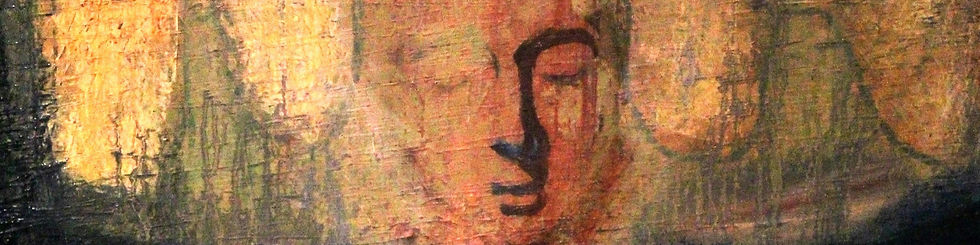
Image © Europeana
Suzanne Strempek Shea is the author of six novels and six works of nonfiction. Her freelance journalism and fiction have appeared in newspapers and magazines throughout the US and in Ireland. She’s taught in four MFA programs, created the one at Bay Path University, and co-directs the Dingle Writers’ Workshop and the Iota Short Forms Conference. With lifelong journalist Tommy Shea, she lives in the US and Ireland. Find her at https://www.suzannestrempekshea.org/.