Writing Toward the Potentials: An Interview with Stefan Bindley-Taylor
Updated: May 28
with Stefan Bindley-Taylor
and Assistant Editor Kate Anderson
"I usually look for something devastating beneath the surface. It’s not necessarily an intentional move, but as I write towards the potentials that open up in a story, this is usually where I find myself wading. I’m most satisfied when I strike a balance between humor and something very human or tragic."
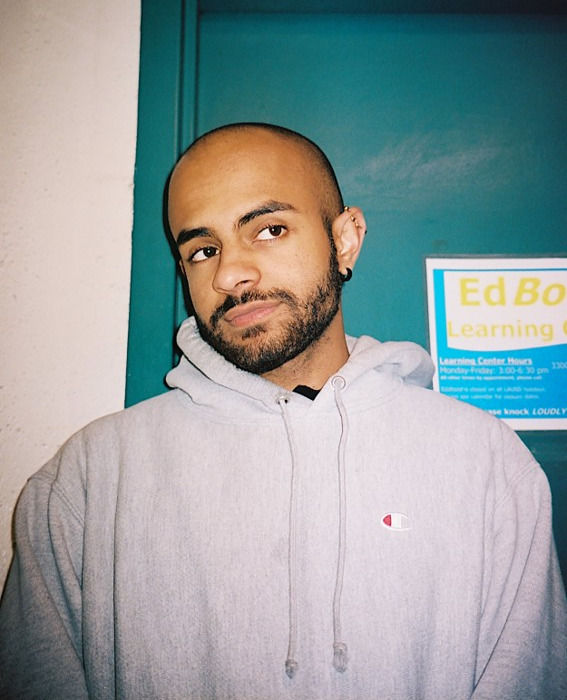
In the following interview, Chautauqua contributor Stefan Bindley-Taylor shares his non-traditional path to writing and how writers can find inspiration in everyday life. His recent and forthcoming work can be found in several outlets, including Chautauqua, swamp pink, The Common, adda, and Brooklyn Rail. His short story "Bread, Meat, and Water" won the 2025 Chautauqua Janus Prize. He is also the recipient of the 2025 DISQUIET Flowers Fellowship, a 2025 Kimbilio Fellowship, the 2024 Brooklyn Caribbean Literary Festival Elizabeth Nunez Prize, a short-lister for the 2024 Commonwealth Foundation Short Story Prize, and a finalist for the PEN 2023 Emerging Voices Fellowship.
More information about Stefan’s writing can be found on his website: https://www.stefanbindleytaylor.com/.
When it comes to your writing process, how do your pieces begin? How do you approach revision, and how do you know when a piece is “finished” or ready to let go of?
●
Almost all of my pieces start from a situation or image that I find strange, striking, or funny. Sometimes it’s a series of lines or a word that comes to me; other times, it’s something I’ve observed. In this case, the first image for this story came from the experience of hearing someone in my apartment complex vomit, but having no idea how to figure out who they were, where they were, and what I would even do if I knew the answers to either question.
From there, I usually look for something devastating beneath the surface. It’s not necessarily an intentional move, but as I write towards the potentials that open up in a story, this is usually where I find myself wading. I’m most satisfied when I strike a balance between humor and something very human or tragic.
Editing-wise, I’ll often copy and paste what I’m working on over and over on top of itself in a document so that I can be ruthless with cuts and structural changes. In terms of making decisions, I actually have a very poor visual imagination—I can’t conjure apples or airplanes or childhood memories or anything like that—so much of my editing process is more somatic and intuitive. Often, I’ll get a sense of color, pattern, and texture in a piece rather than a concrete image, and I’ll try to work towards that. It’s hard to explain, but I try to use a physical sensation, kind of like a gut feeling, to know that a line or a section works, and I’ll keep chopping, rewriting, and rearranging until that sensation holds true for the whole piece.
What inspired “Bread, Meat, and Water?” Did anything surprise you while writing this particular piece?
Some of the earliest passages in the work were derived from a creative response I wrote after being assigned As I Lay Dying in one of my MFA classes. I was really reluctant to accept any inspiration from Faulkner, as I have a strong (and, admittedly, unhelpful and perhaps unfair) aversion to anything “canon.” So while writing, I tried to convince myself that I was really channeling Marlon James’ A Brief History of Seven Killings, which is one of my favorite books. This is not a lie—I still think I derived more direct inspiration from James than from Faulkner, especially as it relates to writing in a Creolized voice (patois, in the case of James)—but halfway through writing the story, I watched an interview with James about his inspirations, and he, of course, listed… Faulkner.
"I do think [writing and music] spring from the same well inside of me...."
As a multidisciplinary artist and practicing musician, how does musicality inform your writing? Has music ever helped you solve a problem in your writing, or vice versa?
The two forms feel fairly separate to me, which I know is not particularly romantic. I do think they spring from the same well inside of me because I find that if I’m absorbed in one, I don’t have much energy for the other, but I rarely feel as though I’m considering one while I’m working in the other.
I think the greatest distinction has to do with expansion and contraction. In music, there is so much more constraint in the form—I have to consider meter and rhyme (I don’t have to, of course, but I do anyway); there’s a lot less space in the song in terms of time, and I’m often trying to capture a huge feeling—love, melancholy, despair, anger, etc.—in as few words as possible. This is particularly true for hardcore or punk songs, where I might be trying to make my case about a staggering, serious topic like colonization, deforestation, or wars for oil, using about 100 words in a minute and a half. I don’t think I’m always very good at this. With writing, I can write forever about the most mundane situation. I feel a greater freedom and trust in myself with regard to style, depth, and precision. But of course, with music, I get to scream what I wrote on stage, and you can’t really beat that.
What obsessions are you currently exploring in your writing life?
I think we all have perhaps two or three obsessions. Readers are better able to pull these out of the work than we are, and I’ve been more than once humbled and even embarrassed to hear in workshops or from friends about the things my work seems to revolve around that I’m not always consciously aware of. I think I’ll keep these to myself for now, but anyone who reads more than a handful of my stories can probably pick them out pretty easily.
I will, however, speak to an obsession I have in my day-to-day life, which I don’t always know how to explore in writing and which I hope to get better at. I find myself quite moved by the breakdown of predictability or expectation, the most disruptive or chaotic potentials in a given space, especially ones that demand a certain kind of obedience—the lecture hall, the faculty meeting, the train car. These kinds of moments feel like a microcosm of a larger sentiment. There are a lot of slogans, quotes, advice, and hot takes floating around right now, especially on the internet. Most of them come from a good place—an attempt to grapple with what feel like increasingly insurmountable structures of domination—to resist, recontextualize, reclaim, etc. At the same time, I think many of these kinds of responses become a kind of emotional materialism, which takes its cues from advertising: a belief that we can solve our suffering, discomfort, and sense of helplessness if we put money in the right places, join the right causes, listen to the right people, say the right words in the right order, repeat the right mantras.
I’m more curious about the moments when these slogans, movements, or our understanding and faith in symbols collapse and cannot explain or help us maneuver through something, and we must instead reconcile and rely on what it means to be human, present, and witness. What do we do then? How do we catch each other? These moments, I think, no matter how painful or disorienting, are the ones in which we might actually discover a kind of hope and a path to somewhere more compassionate, softer, freer.
"I think [writing is] one of the rare art forms that is so intertwined with the experience of living—you get better at it the older you are, as it involves a pouring out of the little obsessions and wonderings you accumulate in a lifetime."
What are you reading currently, and what are you hoping to learn from them to incorporate into your own writing?
A few weeks ago, I read The Housing Lark by Sam Selvon for the first time. I’d read a few of his works before, but this one really just took my breath away. As with all his work, I admire the empathy with which his characters are treated and his ability to put them in compelling and bizarre situations without ever losing a sense of love, humor, and empathy. Last year, a dear friend lent me Sidik Fofana’s Stories from the Tenants Downstairs. Reading this work gave me a similar feeling to reading Selvon; Fofana is absolutely masterful in his attention to humanity, his love of his characters, and his willingness to push them to the brink. I don’t think I’ve seen contemporary life portrayed with such nuance before, and I imagine it will be quite a while again before a book moves me as much as that one.
Lastly, what advice do you have for other writers?
My path into writing was roundabout and unexpected. It was never something I thought I would be doing—I never took a writing class in my undergrad, I barely, if ever, read for pleasure between the ages of 15 and 25, and writing and reading were never really on my radar as even a hobby, let alone a career. Through a series of strange and seemingly arbitrary events that I won’t go into here, it’s now one of the central pillars of my life. So, my advice might be to know there is no rush to find it, let alone to chase it. I think it’s one of the rare art forms that is so intertwined with the experience of living—you get better at it the older you are, as it involves a pouring out of the little obsessions and wonderings you accumulate in a lifetime. At the same time, my advice for any artist is that life must come first. There are more important things, and you should always attend to your daily joys, the experiences of life, love, friends, and family first. The rest will find you, whether you’re looking for it or not.